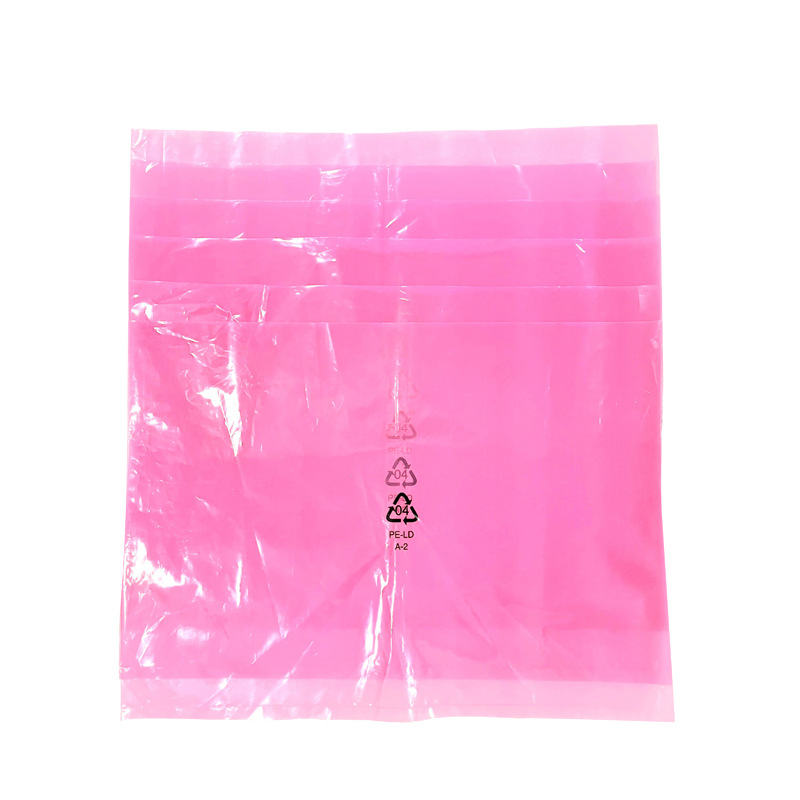
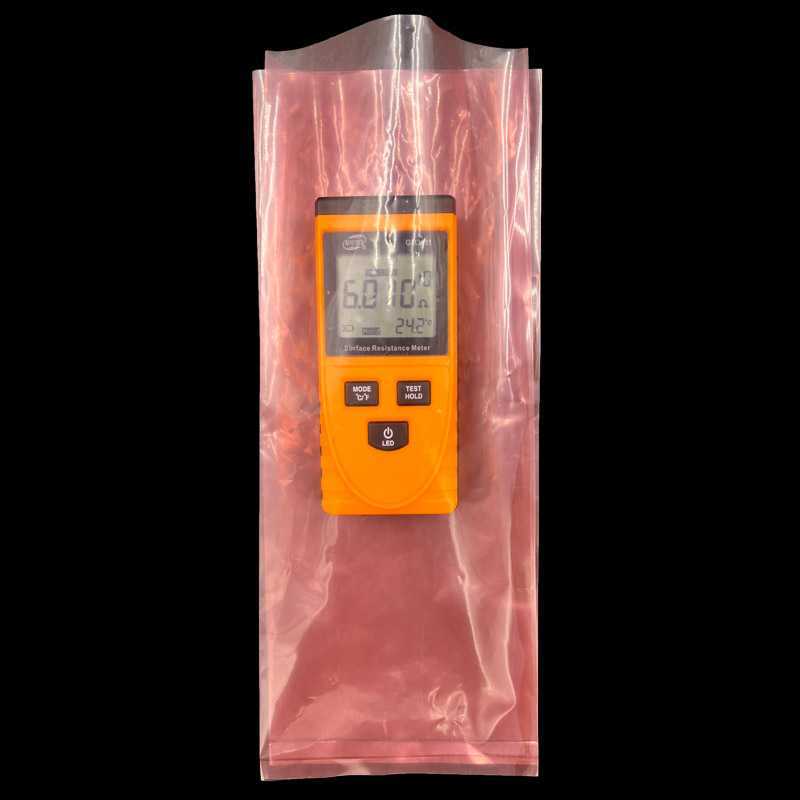
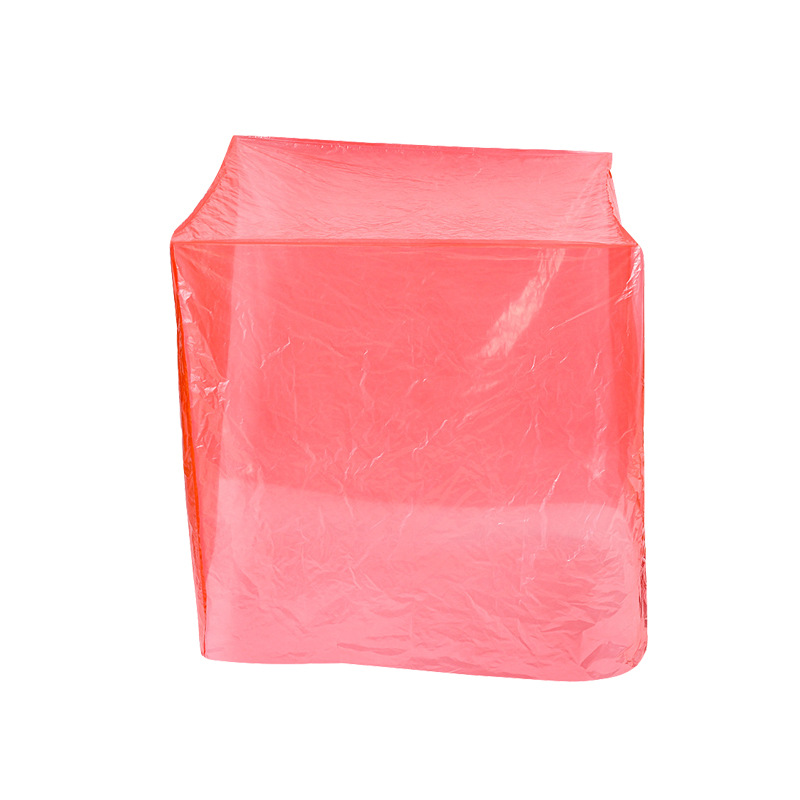
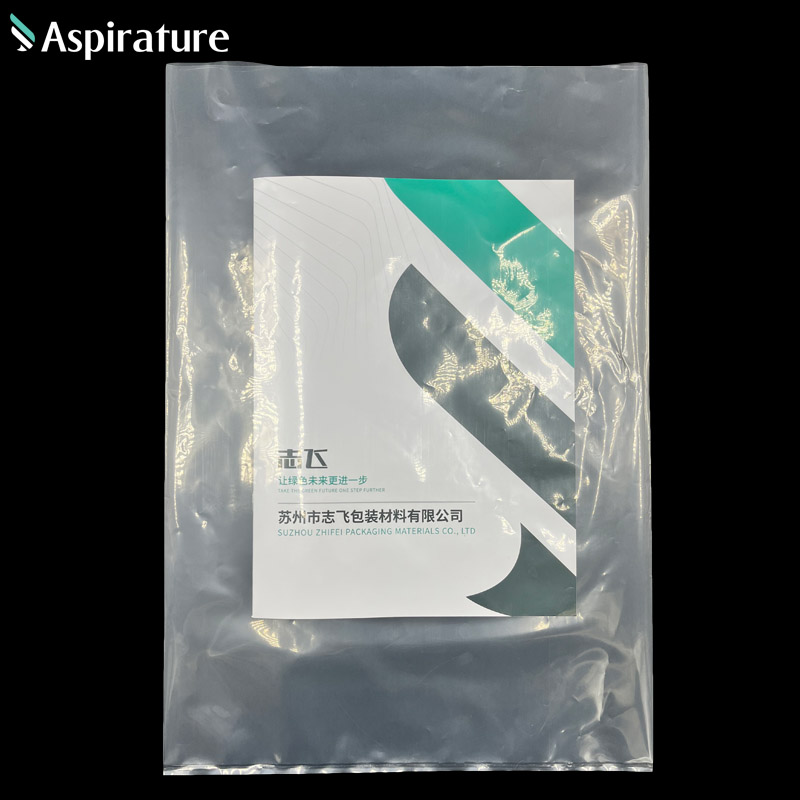
Anti-static PE bags are made from anti-static polyethylene film — light and economical for general ESD protection of components and accessories in handling and storage.
- Anti-static PE film surface resistance sits in the anti-static range
- Customisable in size, thickness, closure and printing
- Suited to inner packing and handling of components and accessories
- Light and transparent for easy counting and management
Specific surface resistance, thickness and printing are discussed per use environment and acceptance.
·Specifications·
Product specifications
| Material | Anti-static PE film |
|---|---|
| Thickness | 0.03–0.15 mm |
| Size | Up to 12 m wide × long |
| Style | Two-side seal / bottom seal / zipper / self-adhesive tape / custom print / label |
| Colour | White / red / blue, customisable (display shades: translucent pink, blue, green) |
| Applications | General electronic product packaging, storage, handling and transport where cushioning is not required and resistance thresholds are moderate |
| Test documents | RoHS 2011/65/EU, (EU)2015/863, ANSI/ESD S541-2019, ANSI/ESD S20.20-2021 |
| MOQ | 1,000 pcs MOQ; negotiable per order |
| Lead time | 7–15 days for standard specs; 10–20 days for 3D / oversized / heavy-duty builds |
| Notes | Resistance scope: customisable range = default spec = 10⁹–10¹¹ Ω (both tables identical). Tribo-voltage and conditioning per ESD manual §4. |
·Physical Properties·
Recorded values and reference methods
| Property | Value | Standard |
|---|---|---|
| Surface Resistance (default spec) | 10⁹–10¹¹ Ω | ANSI/ESD S541-2019 |
| Surface Resistance (customisable range) | 10⁹–10¹¹ Ω | ANSI/ESD S541-2019 |
| Triboelectric Voltage | <100 V | ESD ADV11.2-1995 |
Values apply only to the material, sample and conditions stated in the source record. Confirm the current report and acceptance method for your order.
Test data
Temperature (23±2)°C, humidity (12±3)%RH and (50±5)%RH, conditioned 48h
Conditioned 48h at both (23±2)°C / (12±3)%RH and (23±2)°C / (50±5)%RH; surface resistance complies with ANSI/ESD S541-2019 / ESD S20.20-2021 ranges.
·Selection questions·
Frequently Asked Questions
01 How do anti-static, conductive, and shielding bags differ?
Low charging, conductivity or dissipation, and discharge shielding address different risks. A multilayer bag may provide several of these properties; confirm them with the appropriate tests.
02 Is a lower-resistance conductive bag always better?
No. Resistance is one part of the specification. Select it together with charging, shielding and the device manufacturer’s handling requirements.
03 Is the 10³–10¹¹ Ω range on the anti-static bubble bag a single SKU?
No. Spanning 8 decades physically requires different material systems. Aspirature lists the broad range in the manual; the specific tier is confirmed per customer before quoting.
04 Why combine shielding with anti-static?
Low-charging surfaces limit charge generation during contact, while a suitable shielding structure protects against external discharge. A complete package may need both.
Selection and customization
Related selection guides
- ESD Packaging Selection: Surface Resistance × Shielding × Cushioning
Anti-static, conductive, and shielding are often confused. This article maps Aspirature's 9 ESD products across five decision dimensions (device sensitivity class, surface-resistance tier, shielding requirement, cushioning requirement, test standard), with a 5-step selection method, 4 common pitfalls, and 4 bilingual FAQs.
- Anti-static bags vs shielding bags: selection and acceptance guide
Compare low charging, dissipation and discharge shielding. Plan ESD packaging selection, test documentation, sample checks and custom enquiries.
- Understanding a Four-Layer Shielding Bag
Understand the roles of the protective film, metallic layer, seal layer and low-charging surface in a shielding bag.
- How Anti-static Bubble Packaging Has Evolved: Materials, Structures and Service Life
Compare anti-static, dissipative and conductive packaging constructions and learn what evidence is needed to support a service-life claim.
- Custom Conductive Bubble Bags: An RFQ and Acceptance Checklist for ESD and Cushioning
A practical RFQ checklist for custom conductive bubble bags: define the device, use location, bag construction, shielding requirement, test conditions and sample acceptance.
- Shielding Bags vs Metallised Bubble Bags: Specify the Protection, Then the Evidence
Metallic appearance does not prove ESD shielding. Compare the intended protection, finished construction and acceptance evidence for shielding bags and metallised bubble bags.
- Using ANSI/ESD S541 in Packaging Procurement: Edition, Properties and Report Scope
Specify the standard edition, individual protective properties and sample-report scope before ordering ESD packaging, with a buyer checklist for revisions and acceptance.
- How to Measure ESD Bag Surface Resistance Reliably: Conditioning, Humidity and Acceptance Checklist
Why do resistance readings on ESD bags vary? A practical buyer and QC checklist covering sample state, humidity, conditioning, test method, finished bags and lot traceability.
Application and customization
Explore anti-static, conductive and shielding bags with cushioning options for components, PCBs and precision electronics. Match materials and bag designs to device sensitivity, handling environments and customer acceptance requirements.
- Electronic components and PCBs
- Production handling and storage
- ESD protection and cushioning in transit
Before calling: Device type, dimensions, environment and customer performance and test requirements