
Container Liner
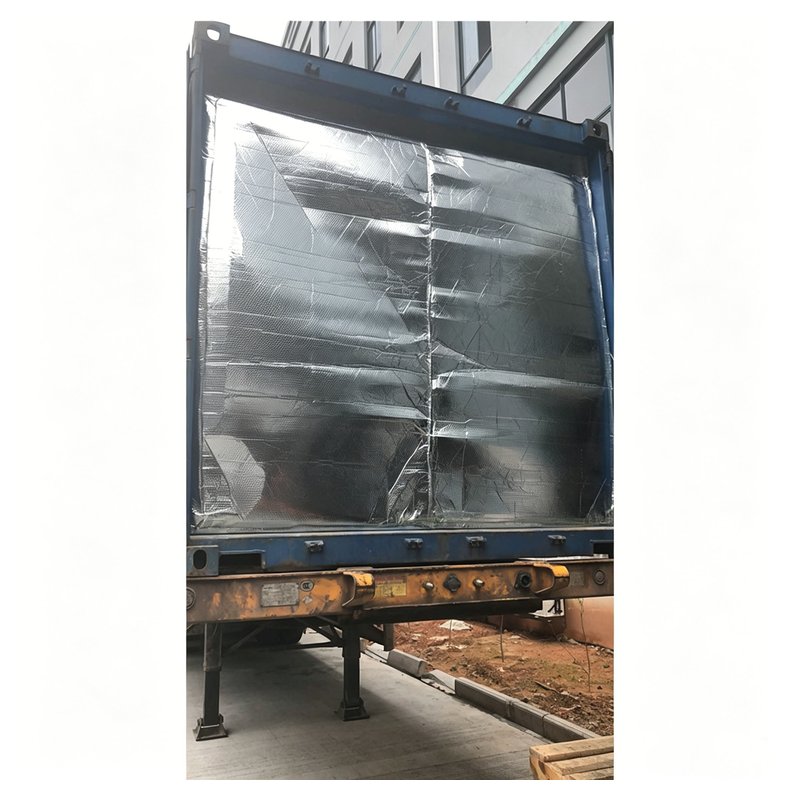
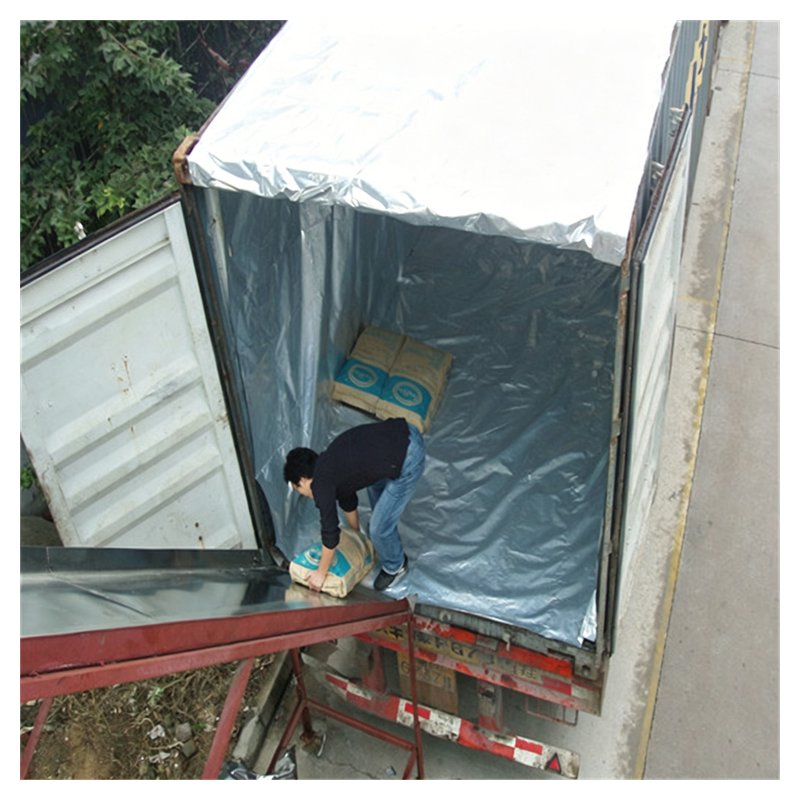
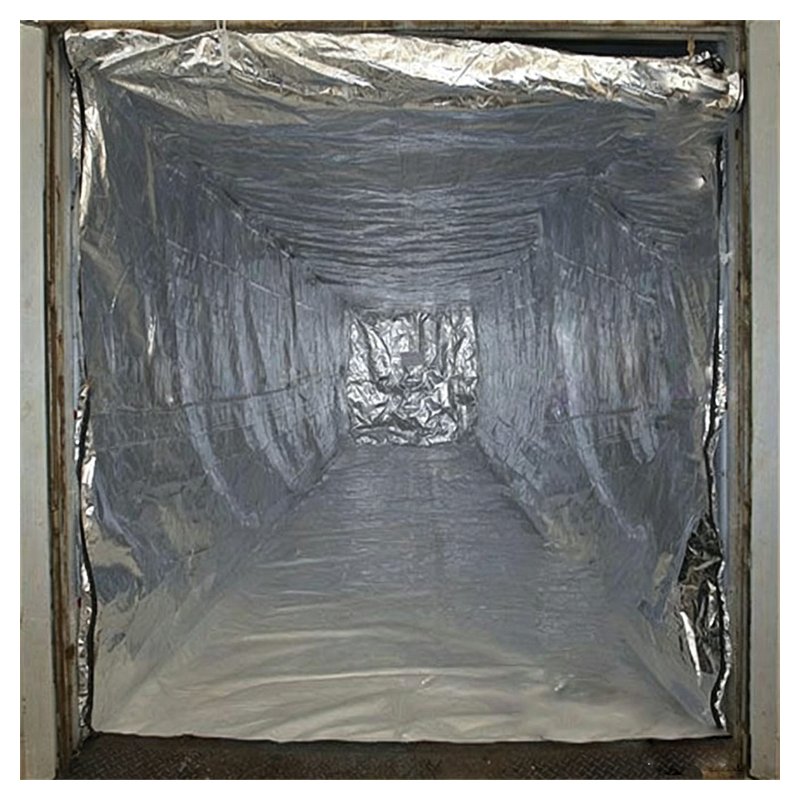
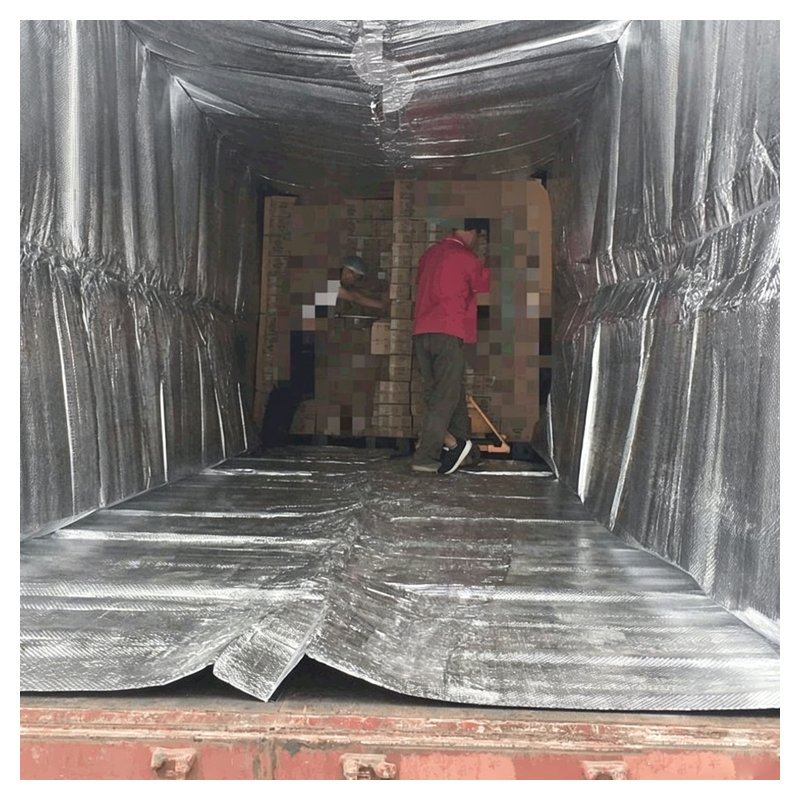
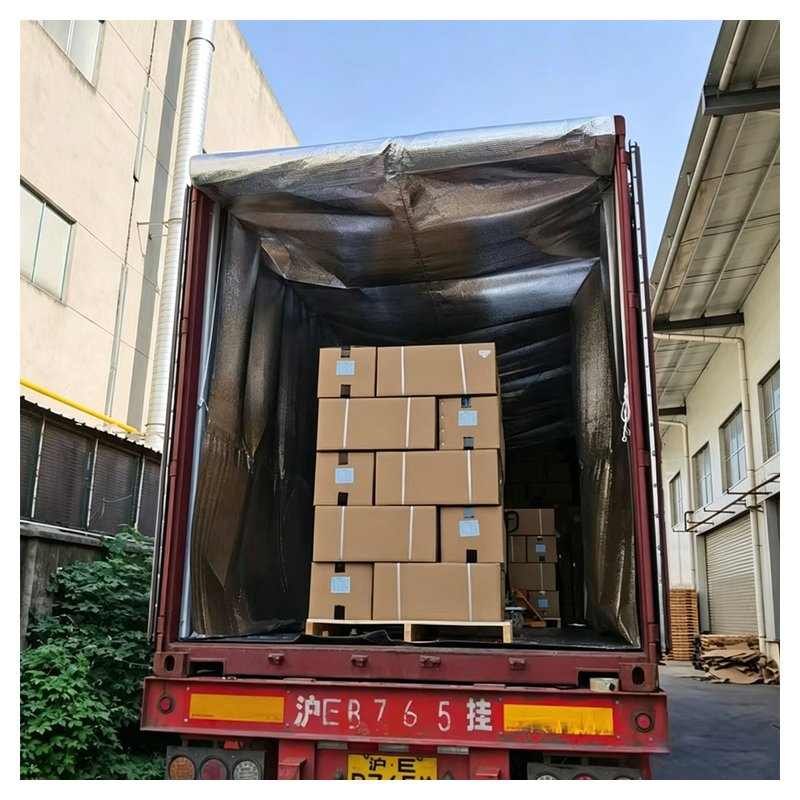
Container liners laminate alu + PE + woven fabric to smooth rapid temperature swings in transit.
- Alu + PE + woven blocks light and reflects heat
- Seams and hook-and-loop closure can be discussed; installation time varies with container, site and operator experience
- For evaluating reduced temperature fluctuation; verify inside-outside difference with the load and actual route
- For container shipping, stacking and temporary storage
See test data; per box type (20GP/40GP/40HQ/45HQ).
·Specifications·
Product specifications
| Material | Alu + PE + woven + PE + Alu (135 g/m²) |
|---|---|
| Size | INSULPACK 20GP / 40GP / 40HQ / 45HQ |
| Unit weight | 20GP 14±5kg/pc; 40HQ 25±5kg/pc; 45HQ 27±5kg/pc |
| Style | Sealed joints, Velcro closure, air-tight |
| Applications | Container shipping, stacking, pallet covers, container houses |
| Notes | Installation guidance and spare-part requirements can be discussed; scope and cost are confirmed with the order |
·Physical Properties·
Recorded values and reference methods
| Property | Value | Standard |
|---|---|---|
| Tensile Strength | Vertical 650, level 520 N/50mm | — |
| WVTR | <0.02 g/(m·h) | ASTM E96 |
| Bursting Strength | 1366 kPa | ISO 2759:2014 |
| Reflectivity | 95-97% | — |
| REACH | 241 SVHC ≤ 0.1 | 1907/2006 |
Values apply only to the material, sample and conditions stated in the source record. Confirm the current report and acceptance method for your order.
Test data
48-hour outdoor direct-sunlight test at 34.8℃ ambient: internal range 24.22-42.33℃ (variance 18.11℃), external 23.46-71.35℃ (variance 47.89℃); inside-outside difference up to 10-20℃.
·Selection questions·
Frequently Asked Questions
01 Does lower thermal conductivity always mean better insulation?
No. Conductivity describes the material and must be read with thickness and thermal resistance. EPE has 0.035 W/(m·K) with only 0.014 (m²·K)/W, while XPE has 0.041 W/(m·K) but 0.12 (m²·K)/W. Compare both and validate with the complete packaging.
02 What is the thermal conductivity of the woven cover?
The woven cover is not specified by conductivity; it is designed for strength and weatherability. The manual gives 1366 kPa bursting strength, 520-650 N/50mm tensile strength, 95-97% reflectivity and -40℃ to 100℃ tolerance.
03 Five-sided or six-sided?
Six-sided wraps the base as well, giving better sealing at slightly slower handling; five-sided is faster to load but leaves the base uncovered. Use six-sided for temperature-sensitive cargo and handle the base separately with five-sided.
04 Can I order using the cargo dimensions only?
Not recommended. Size follows the pallet and the loaded overall L/W/H including pallet height; ordering from the cargo outline alone risks covers that are too tight or too loose.
Selection and customization
Related selection guides
- Bubble, EPE, XPE or woven pallet cover? Comparing the four constructions
The four pallet cover constructions compared on structure, thickness, thermal conductivity, thermal resistance and strength, with a selection checklist based on pallet size and transport conditions.
- How long does a pallet cover insulate? Thermal packaging selection and testing
Plan pallet covers and container liners using route conditions, load configuration and temperature records. Distinguish material data from whole-package performance.
- How much does a pallet cover reduce temperature? Reading four data sets
Four measured data sets — direct sunlight, -10℃ cold, a woven-cover comparison and an SGS insulation test — read together, explaining how sensor position, duration and ambient temperature shape the numbers and what cannot be concluded from a single reading.
- Choosing a container liner: balancing insulation, light blocking and installation time
Container liner selection along five dimensions — insulation range, light blocking, size models, installation labour and mechanical strength — with a verifiable parameter table and a confirmation checklist.
- Choosing an insulated water tank cover: thickness, construction, sizing and outdoor life
Water-tank cover selection from heat-loss paths, construction comparison, thickness choice and measurement through to outdoor life and an acceptance checklist.
- How to Choose a Cold-Chain Thermal Bag: Bag Type, Foil Layers, Phase-Change Packs and Validation for Food Delivery, Fresh Produce and Pharma Shipping
A selection and acceptance guide for cold-chain thermal bags covering bag type, foil layers, closed-cell foam thickness, phase-change pack ratio, and full-package temperature validation across food delivery, fresh produce and pharma shipping.
Application and customization
Discuss bubble, EPE, XPE and woven constructions for pallet transport, handling and storage. Explore five- or six-sided designs, zipper or hook-and-loop closures, edge binding and label windows for your load configuration.
- Pallet handling and storage
- Ocean freight and container transport
- Packaging for temperature-sensitive cargo
Before calling: Loaded dimensions, pallet allowance, cargo type, route, duration and closure design